








A stack of eleven tools can cover every channel and still leave each investigation starting from scratch.
A stack of eleven tools can cover every channel and still leave each investigation starting from scratch.
Data security tool sprawl is now the default. The 2026 Unified Data Security Report, produced by Cybersecurity Insiders in collaboration with Netskope, surveyed 1,064 practitioners and found that 58% of organizations run eleven or more data security tools. Only 7% describe their stack as fully unified.
Every respondent works at a company with 2,500 or more employees. These aren't under-resourced teams. They bought tools to close gaps. The report describes the result as a lack of coordination rather than a lack of coverage. Netskope is a security vendor, so weigh its commercial interest accordingly. The findings still echo what many security leaders have told us.
Why does owning eleven data security tools still leave gaps?
Each tool answers its own question well. DLP watches data leaving. A CASB watches cloud apps. Posture tools inventory what sits at rest. Trouble starts when one piece of data touches more than one of them. The report found that 23% of respondents say their tools share almost no context. Only 7% can track sensitive data moving between applications in real time.
Picture a customer file that gets shared externally then summarized into a new document and pasted into a chat window. Three tools each see one fragment and none of them sees the path. The report names three costs practitioners feel most. Manual correlation across systems leads at 44%. Inconsistent policy enforcement across tools follows at 42% and visibility gaps at 40%.
You might feel the fix is better integration work on your side. Many security leaders have felt the same. The report's authors reached a different conclusion. Data security has been assembled tool by tool without a shared layer for data context and policy decisions.
What does a fragmented data security stack cost during an investigation?
A lot of time. The report found that 45% of security teams query six or more separate systems per investigation. Some 16% query more than ten. Each system has its own log format and its own retention window. The analyst builds the timeline before assessing the exposure.
Deadlines raise the cost. Only 12% of respondents can quickly produce a comprehensive chain of custody when regulators or auditors ask for one. Another 36% need significant manual effort across multiple systems. GDPR allows 72 hours for breach notification. The report notes that a breach found on a Friday afternoon can burn much of that window before the full data path is clear.
That's work nobody hired a security analyst to do. It also grows with every tool you add.
How does AI make data security tool sprawl worse?
AI adds new places for sensitive data to go. Older tools weren't built to watch them. The report found that 98% of organizations use AI. Only 7% are very confident that sensitive data isn't flowing into AI workflows without proper inspection or policy. Another 39% suspect it's happening but can't confirm it.
Detection struggles once data changes form. Only 9% say they can reliably recognize sensitive data after it's been modified. Another 17% rely on exact-match detection or fingerprinting that fails when content is copied or rewritten. A customer list blocked as a file upload can come back minutes later as an AI-generated summary.
Policy alone doesn't close the gap. The report found that 67% of organizations maintain an AI policy but only 14% enforce it through inline controls.
What does Complete data security look like in practice?
Complete is one of the three principles behind MIND, alongside Simple and Autonomous. It means one platform that discovers, detects and prevents across data at rest and in motion, in place of a separate tool for each job.
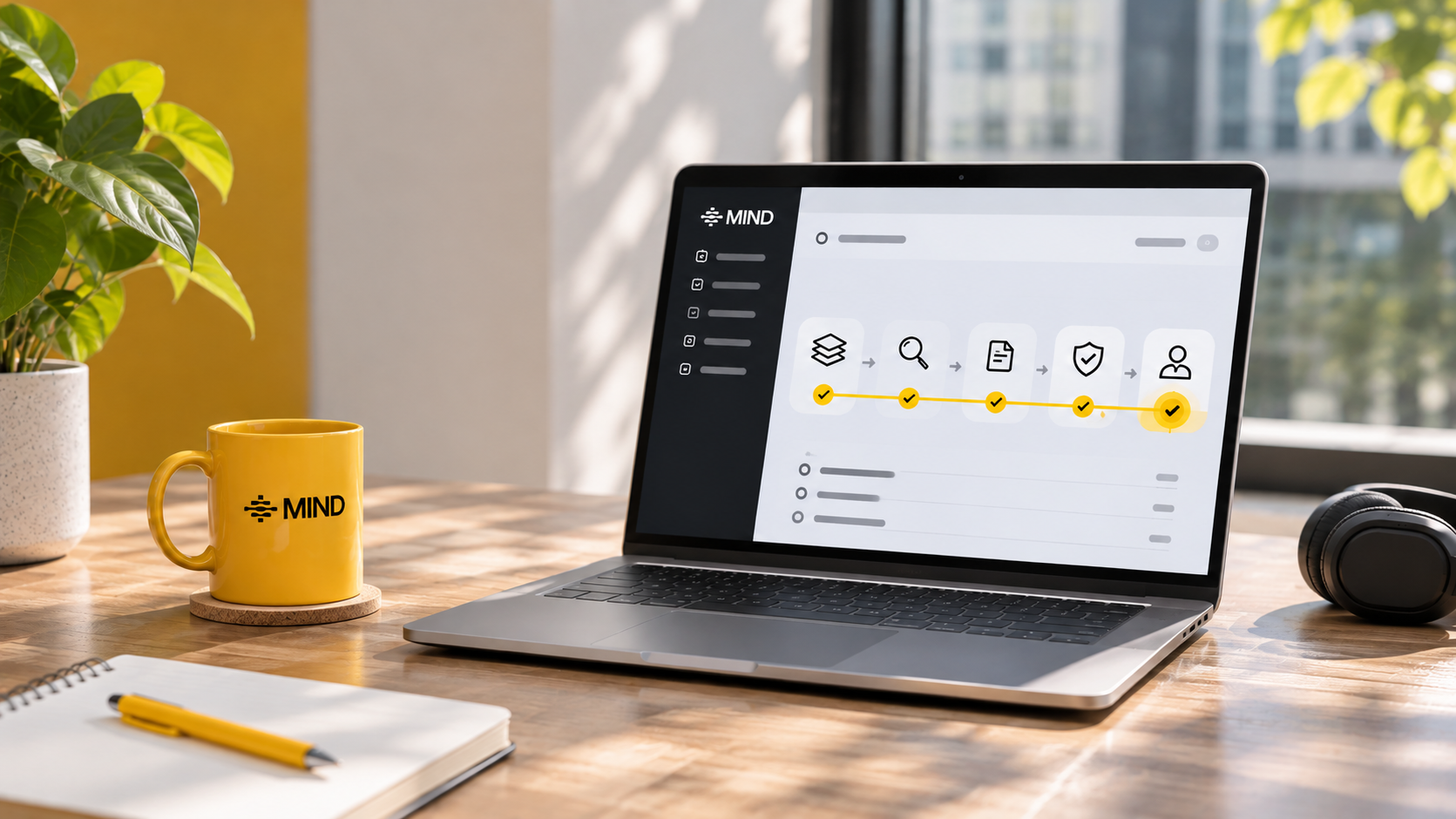
MIND connects to where sensitive data lives, including SaaS apps, on-premise file shares, endpoints, email and AI tools. It builds one catalog of resources and file activity, then classifies data using content and context rather than regex alone.
Prevention happens in real time on the endpoint and in the browser, with no network SSL break-and-inspect. Controls adapt to risk, so blocks are reserved for risky activity while everyday users get speed bumps and guidance. That matters because 41% of respondents say security controls create enough friction that employees turn to unapproved tools.
This is where the Minding technique applies. MIND is minding the path sensitive data takes, so your team sees it in one place instead of across a stack of consoles. It also complements existing Purview deployments, so the labels you've already applied get smarter instead of replaced.
“MIND allows us to see and protect our data across every vector, endpoints and SaaS, from a single place. It's like having a spotlight that shines where visibility didn't exist before.”
Al Faiella
Senior Director of Security Engineering, ThoughtSpot
How can you see what Complete looks like in your environment?
The report suggests a quick test. Count how many consoles an analyst opens during a routine investigation. If the number keeps growing, the architecture is asking your people to be the integration layer.
MIND deploys in minutes and delivers insights within 24 hours, so you can judge it on your own data. Book a demo and see Stress-Free DLP across data at rest and in motion.